


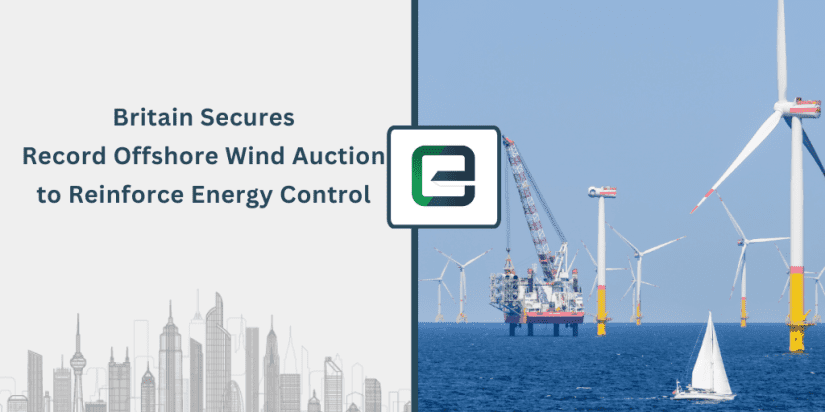
UK Offshore Wind Auction Delivers 8.4 GW and Boosts Renewable Transition
Britain’s offshore wind auction has secured a record 8.4 GW of new wind power capacity, which is the largest of its kind in the UK and Europe. This outcome is part of the UK government’s Contracts for Difference (CfD) Allocation Round 7 (AR7), which concluded on 14 January 2026. The total capacity awarded in this round is expected to supply clean electricity that will be enough to power 12 million homes.
The AR7 results show that fixed-bottom and floating offshore wind projects can now compete effectively in competitive auctions. Tender processes like this aim to reduce costs for households over time by encouraging diverse investment.
What the Auction Means for UK Energy and Bills
The latest Contracts for Difference (CfD) contracts were awarded at strike prices around £91 per megawatt hour for fixed-bottom offshore wind projects. This price is significantly lower than the cost of building and operating a new gas-fired power station, which analysts estimate at around £147 per megawatt hour using industry metrics.
Because prices in this auction cleared below the administrative strike price set by the government, the impact on consumer energy bills may be reduced. Longer contracts, extended from 15 to 20 years, were offered in this round to enhance investor confidence and improve financing conditions.
Projects Bringing Power and Jobs to UK Regions
Major wind projects awarded CfDs in AR7 include large schemes in the North Sea and Irish Sea. These developments support economic activity in coastal and industrial regions through job creation in construction and long-term operations.
Among the awardees, some of the most significant capacity was secured by established energy firms. Partnerships between developers and investors, such as those between RWE and KKR, demonstrate how private investment is helping to deliver large-scale offshore wind projects.
Broader Context: UK and European Clean Power Goals
This record result contributes to the UK’s target of expanding offshore wind capacity by 2030, supporting its wider clean energy strategy. Offshore wind has played a growing role in the UK’s energy mix for decades, reducing reliance on imported fuels and fossil fuel generation.
Across Europe, nations have recently pledged to develop 100 GW of offshore wind collaboratively by 2040, linking projects through shared infrastructure. This collective effort seeks to enhance energy security, create jobs, and reduce greenhouse gas emissions.
